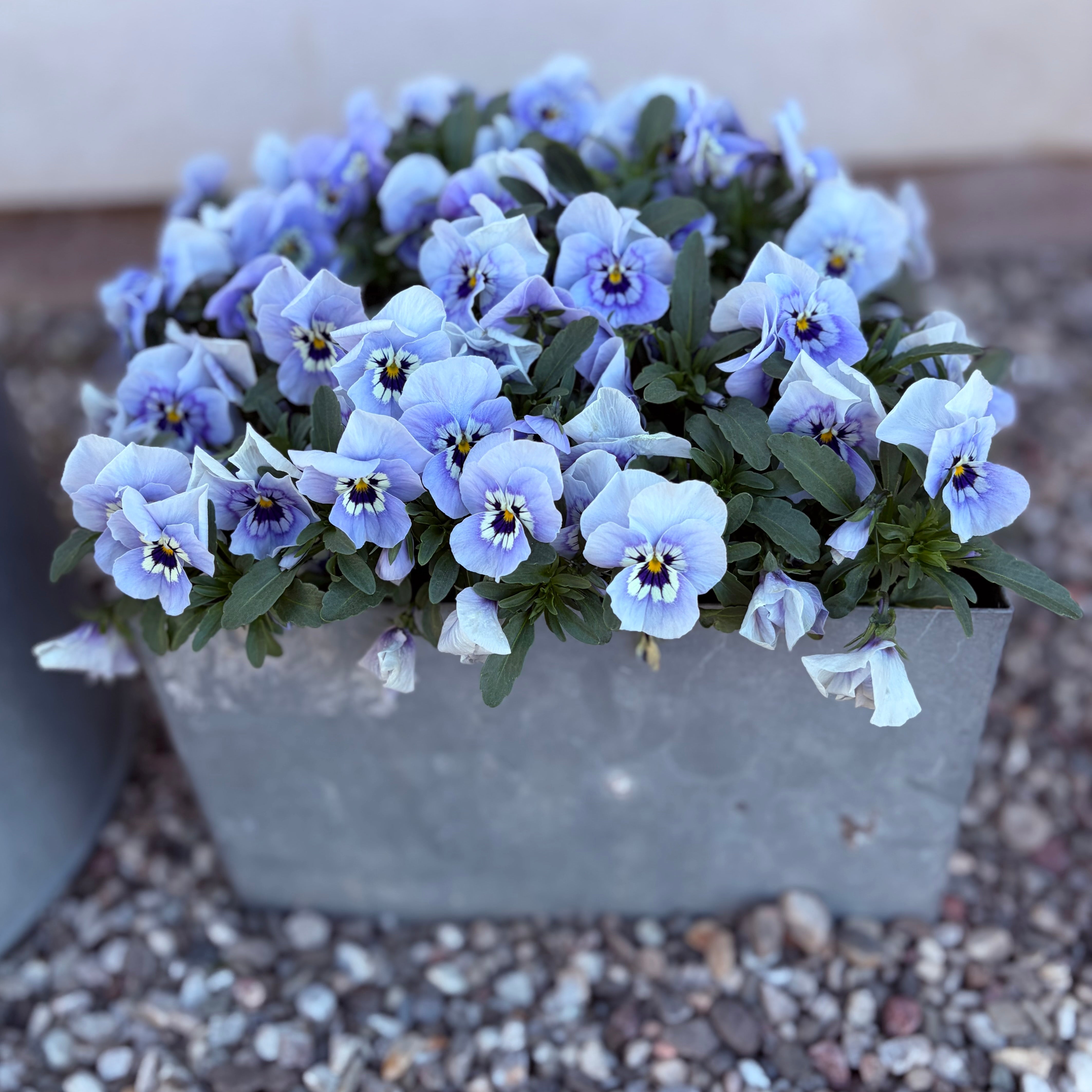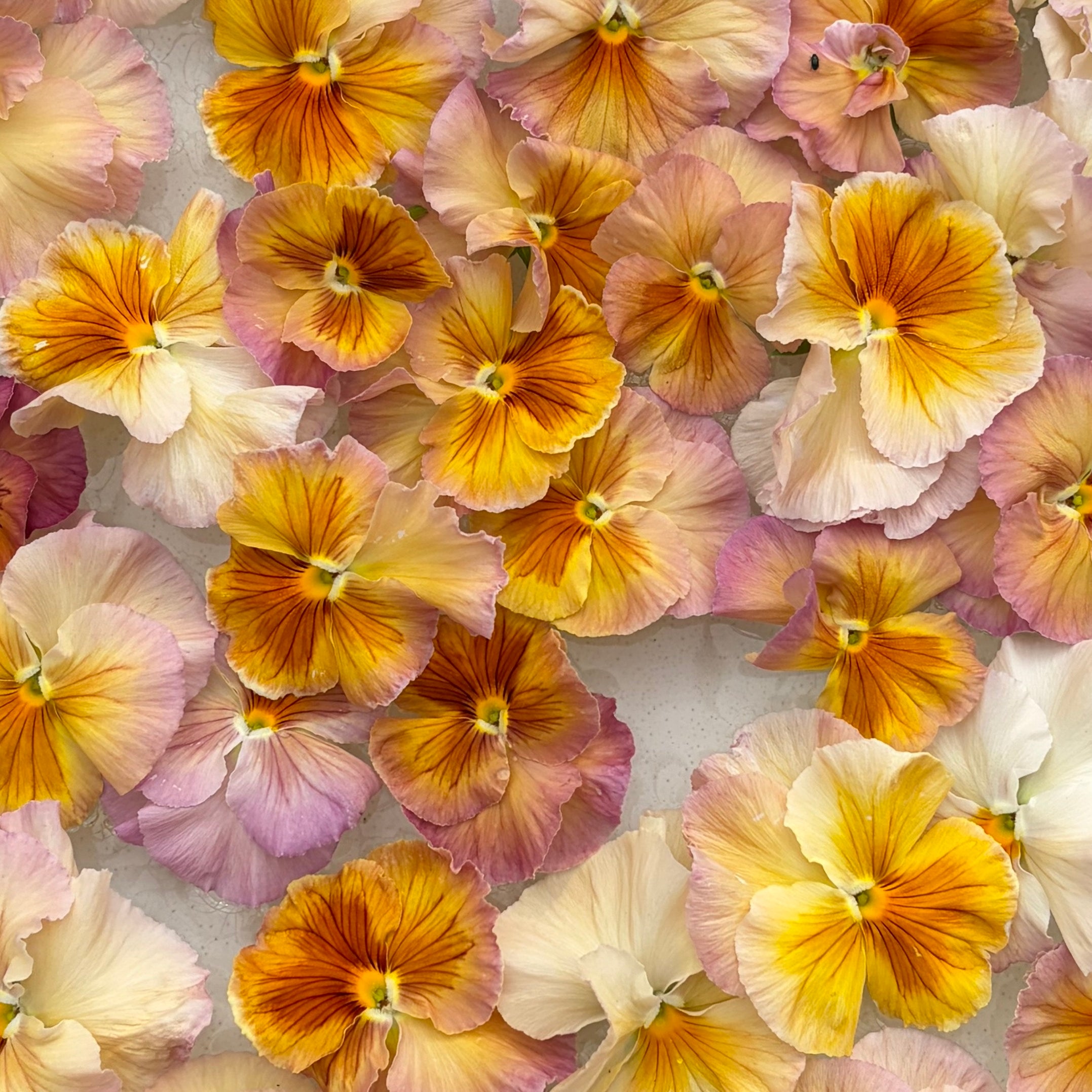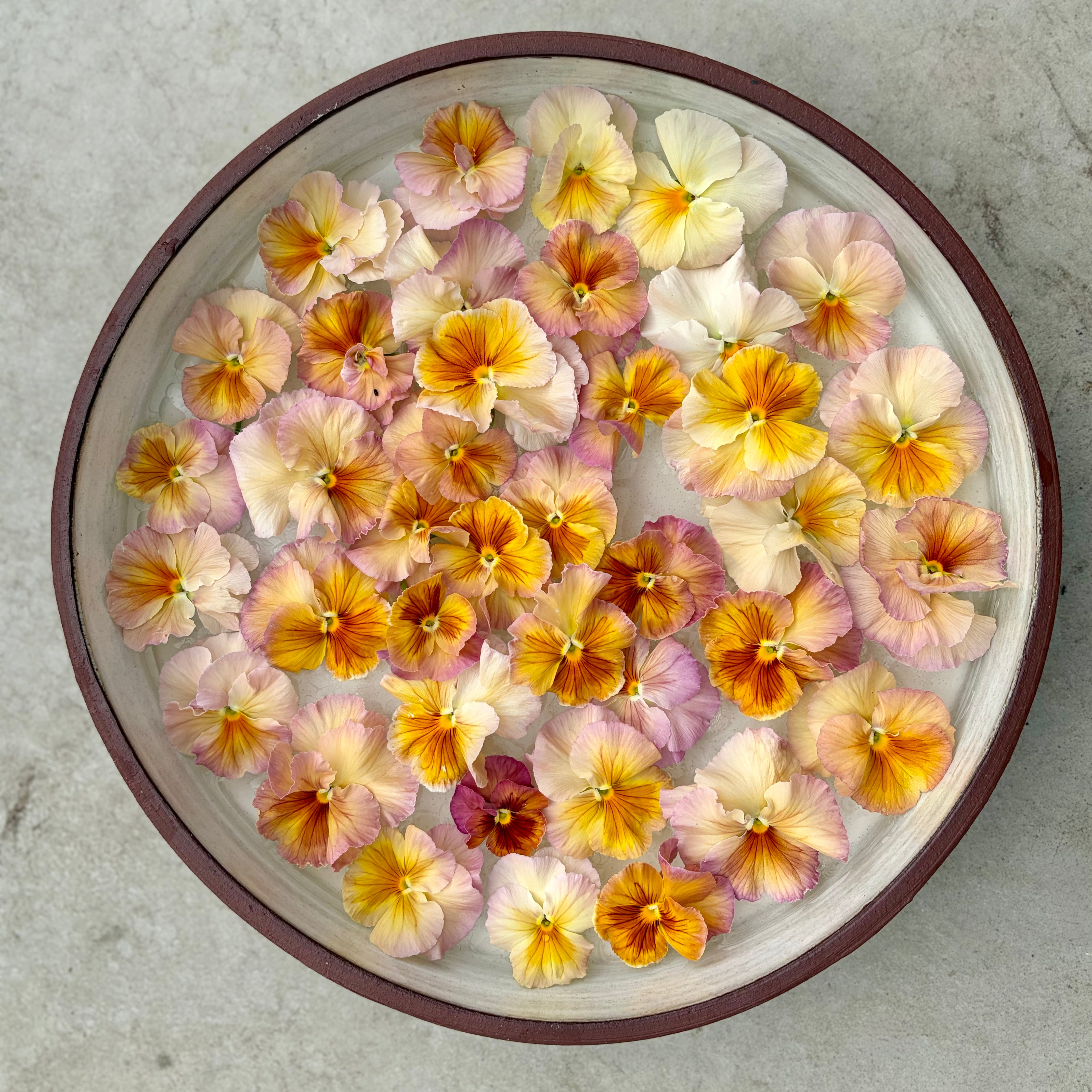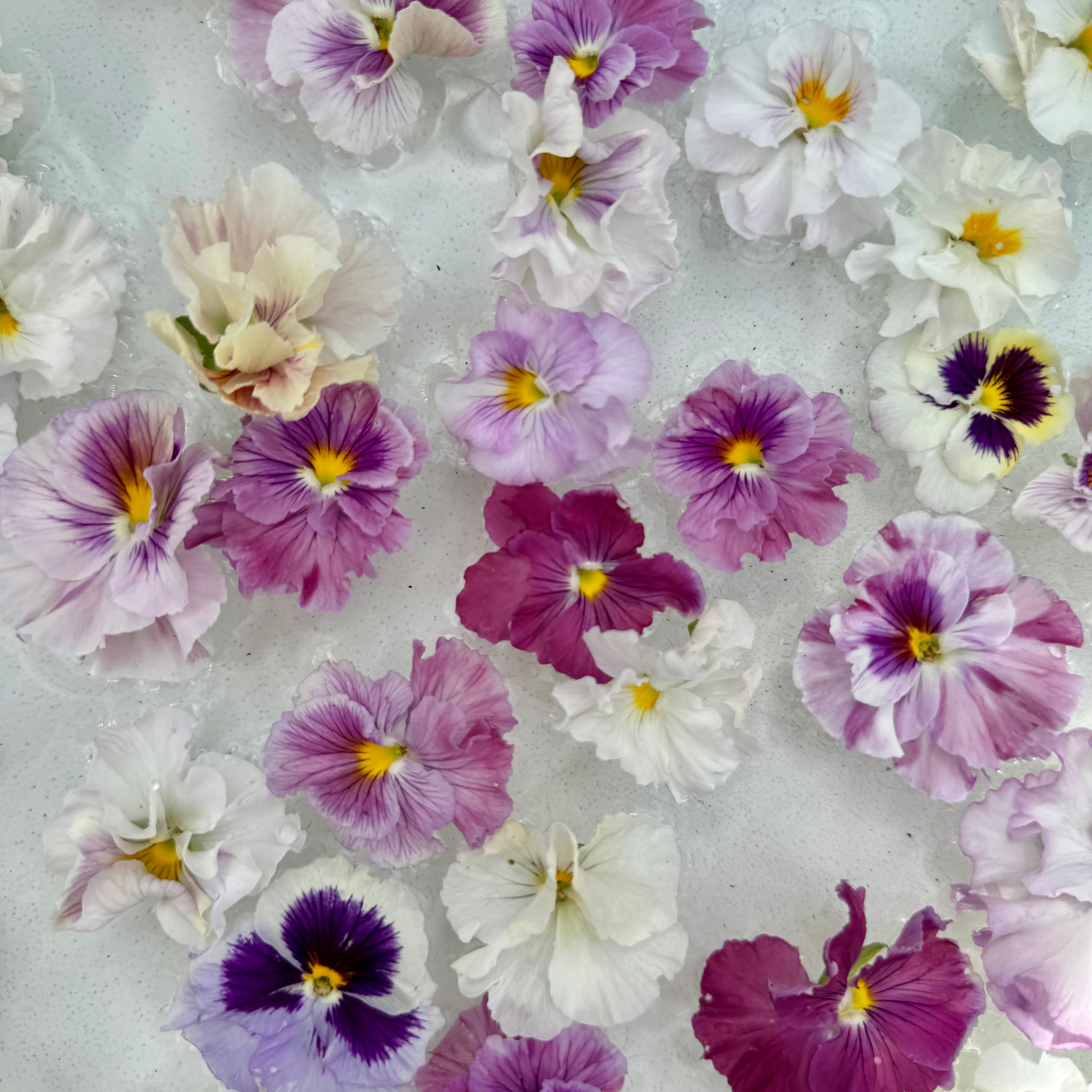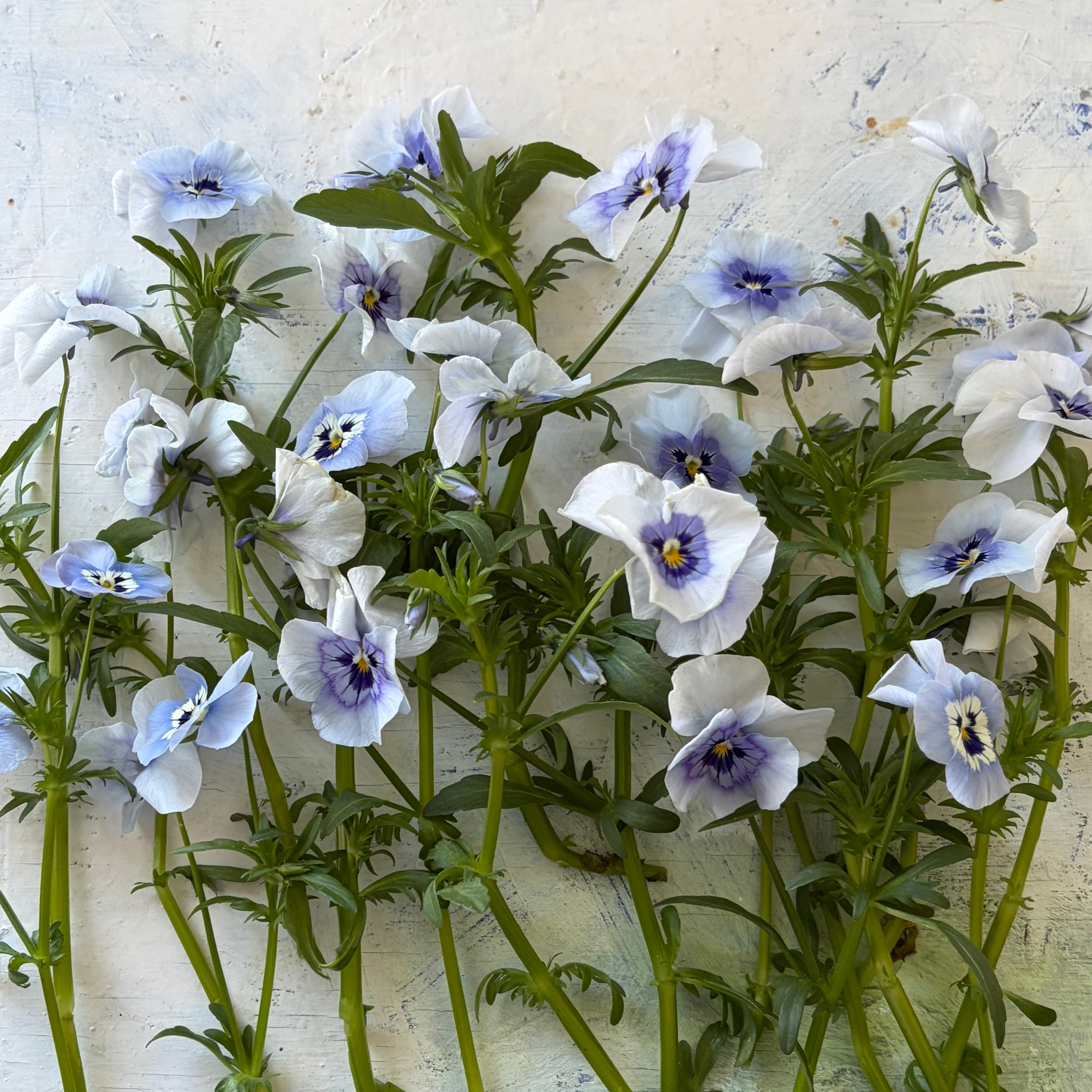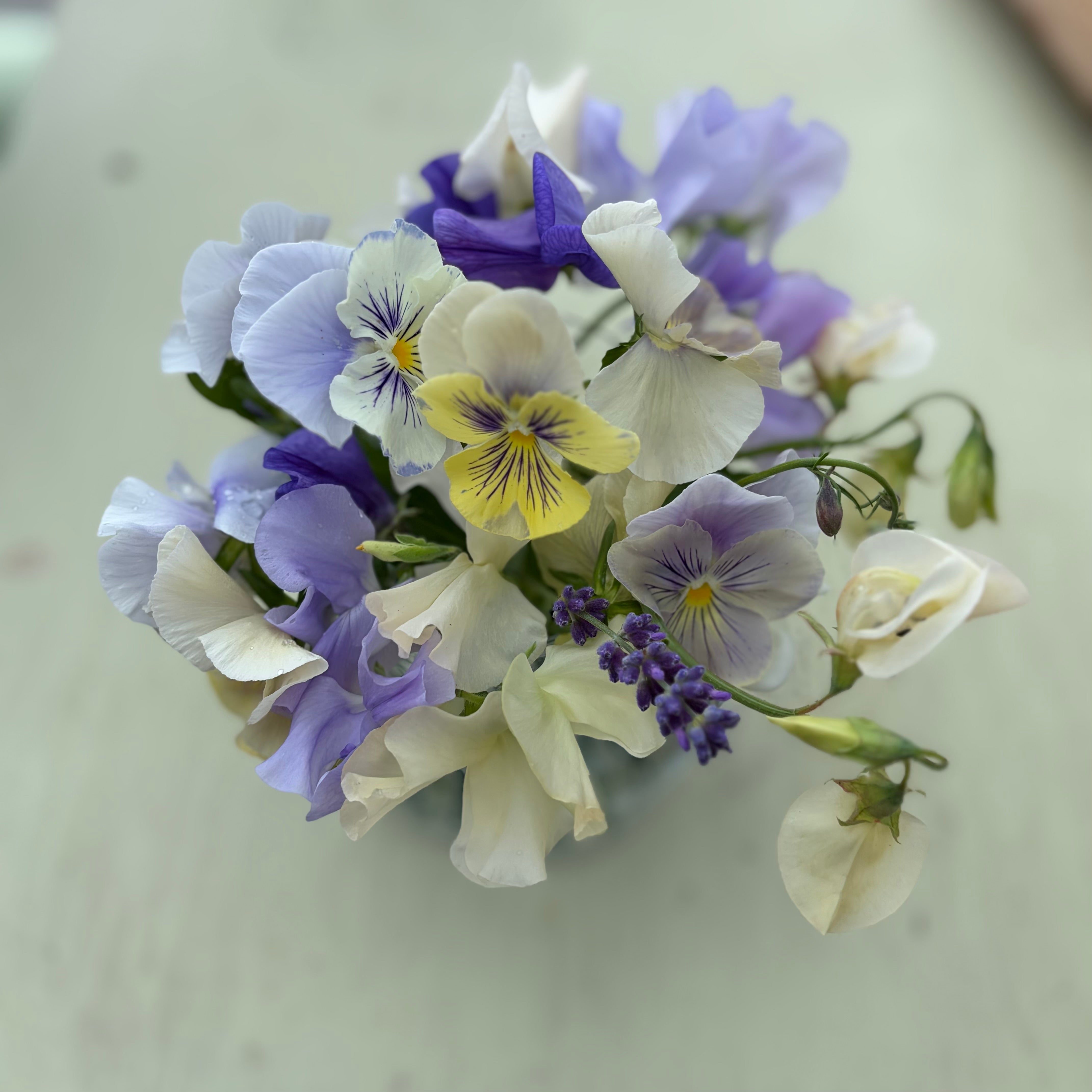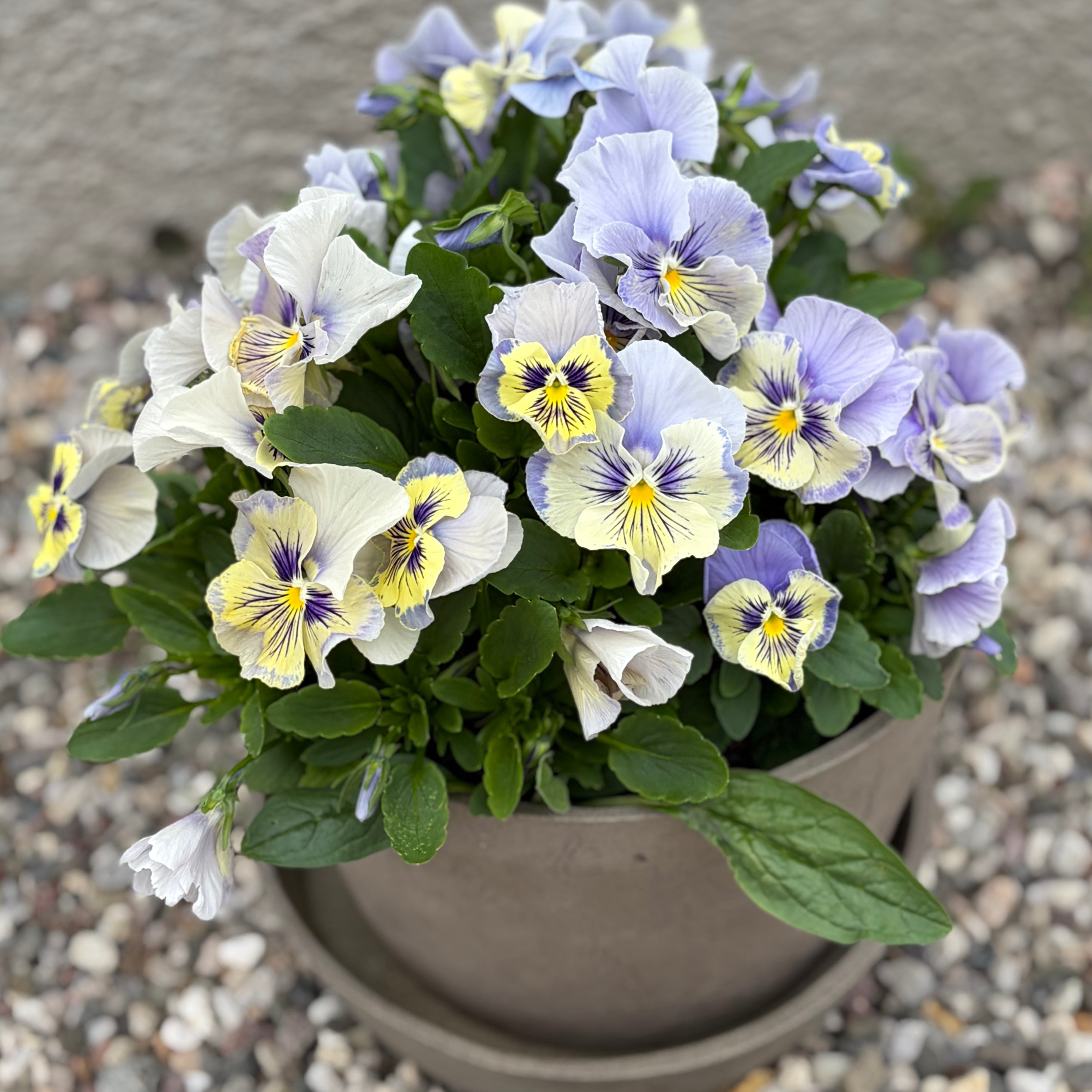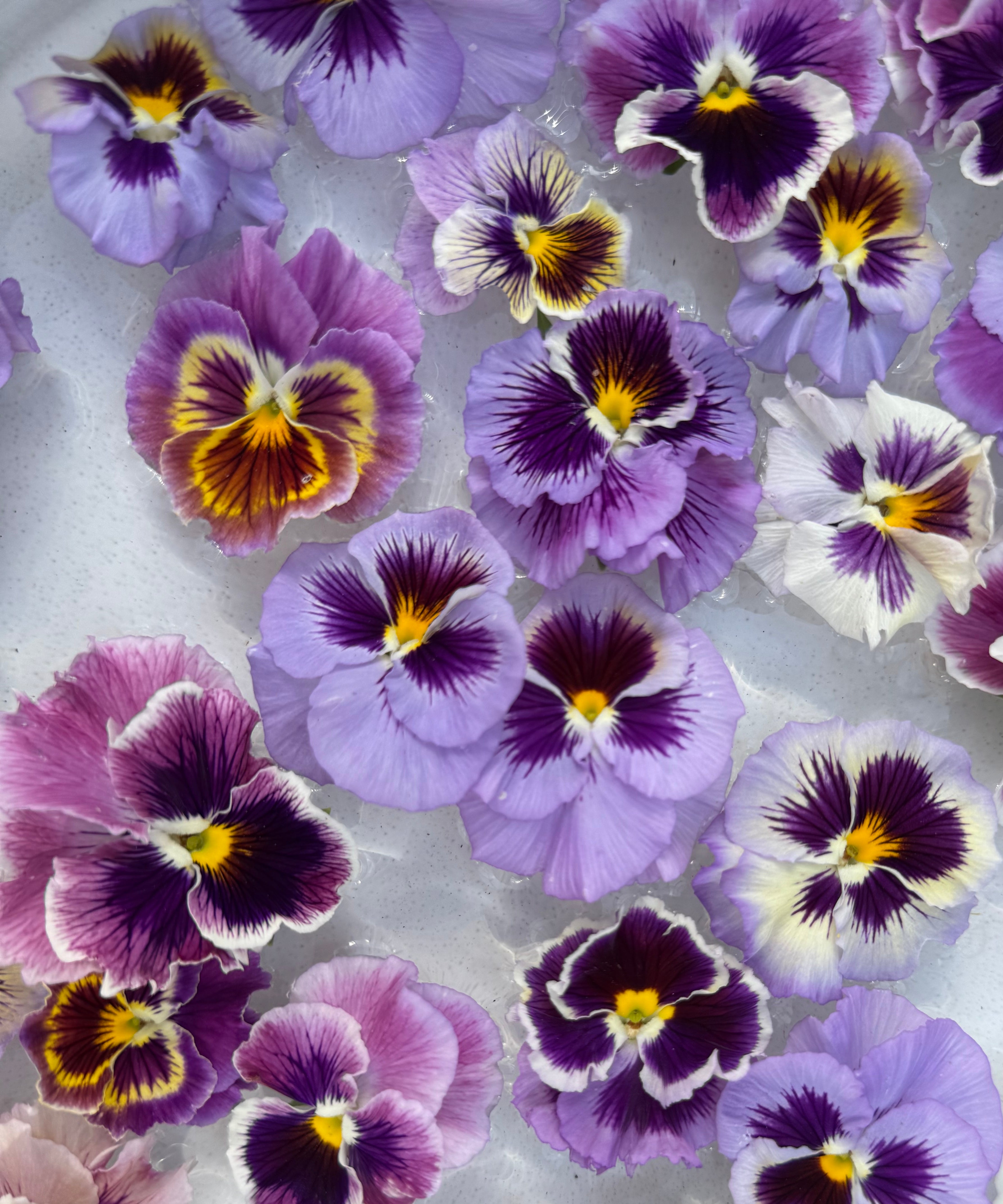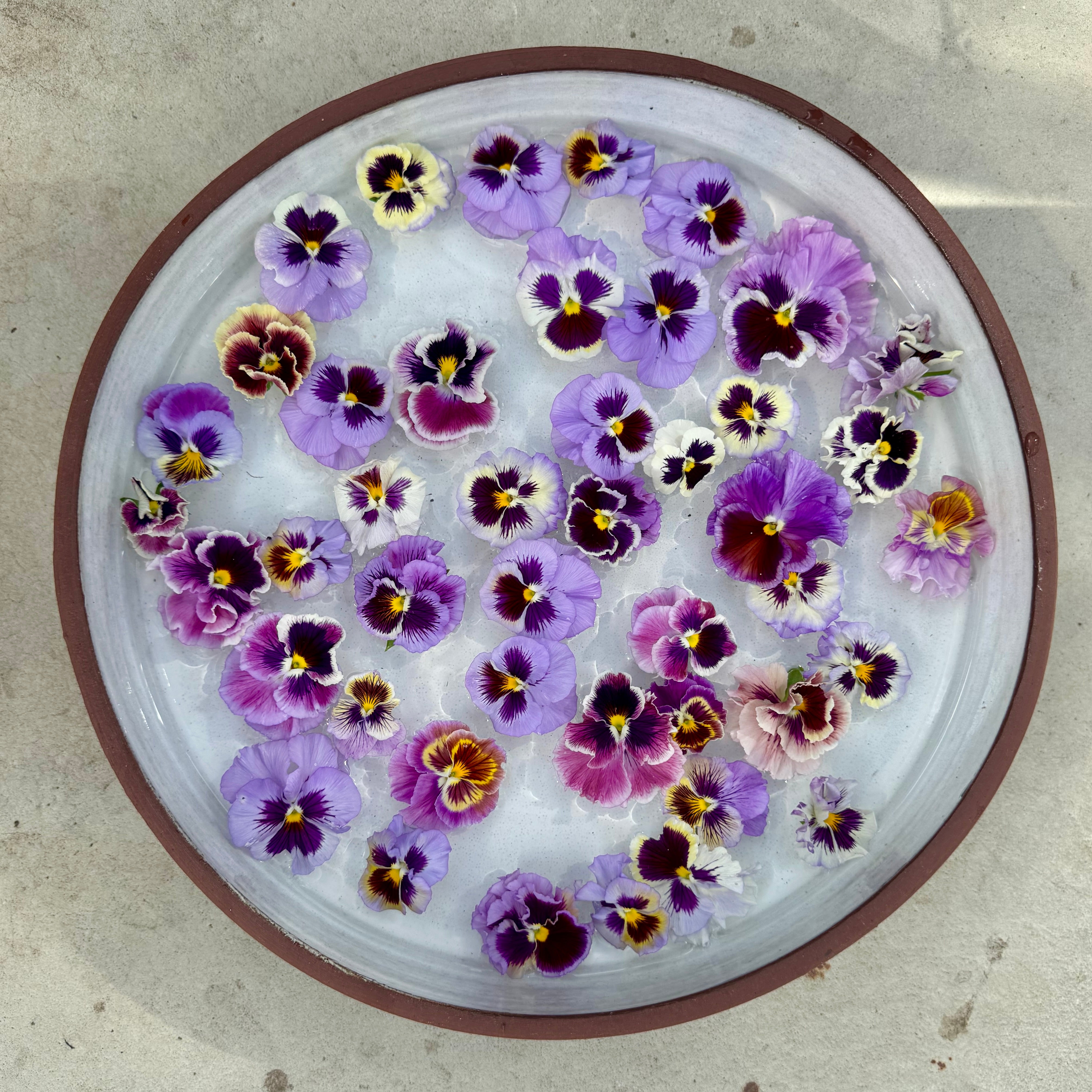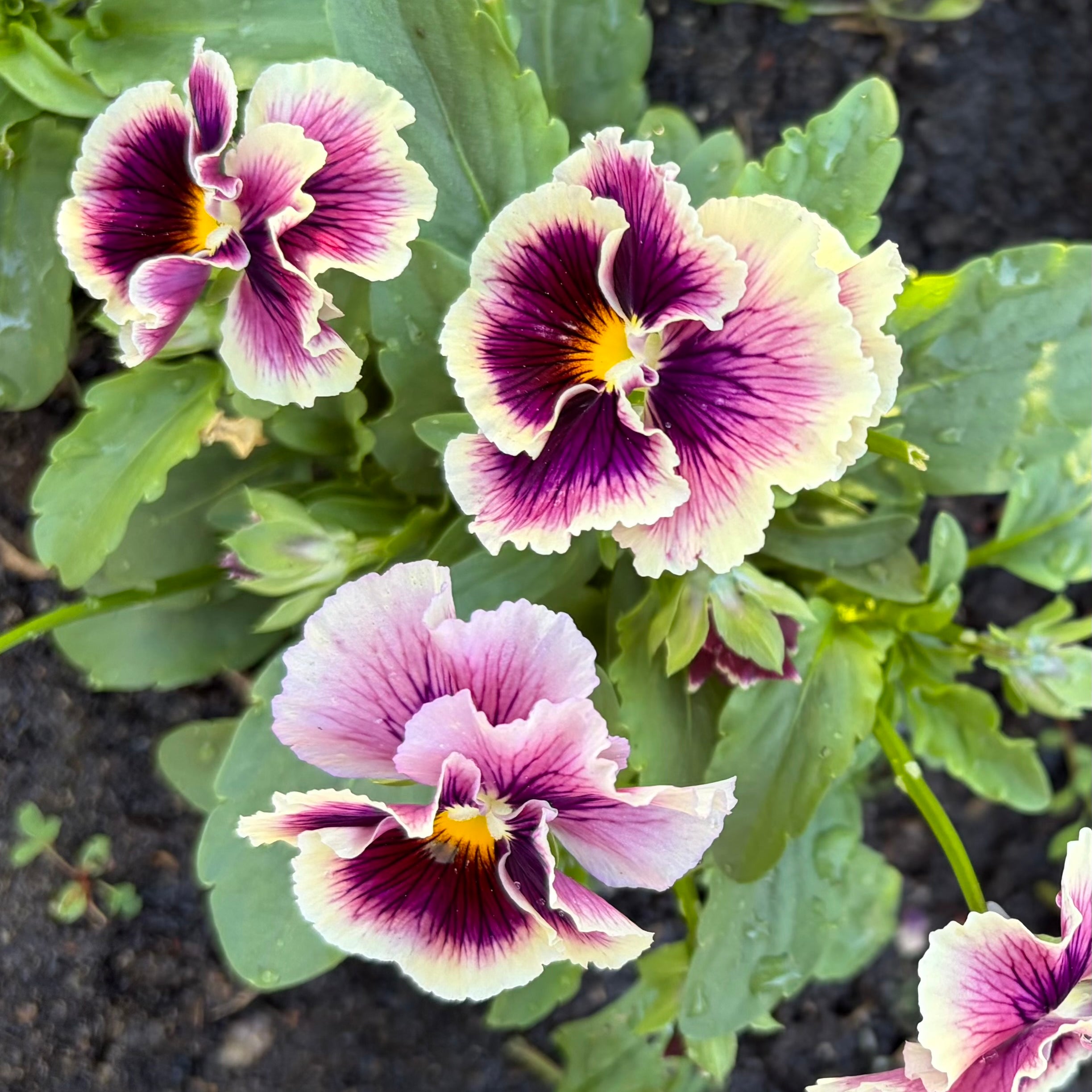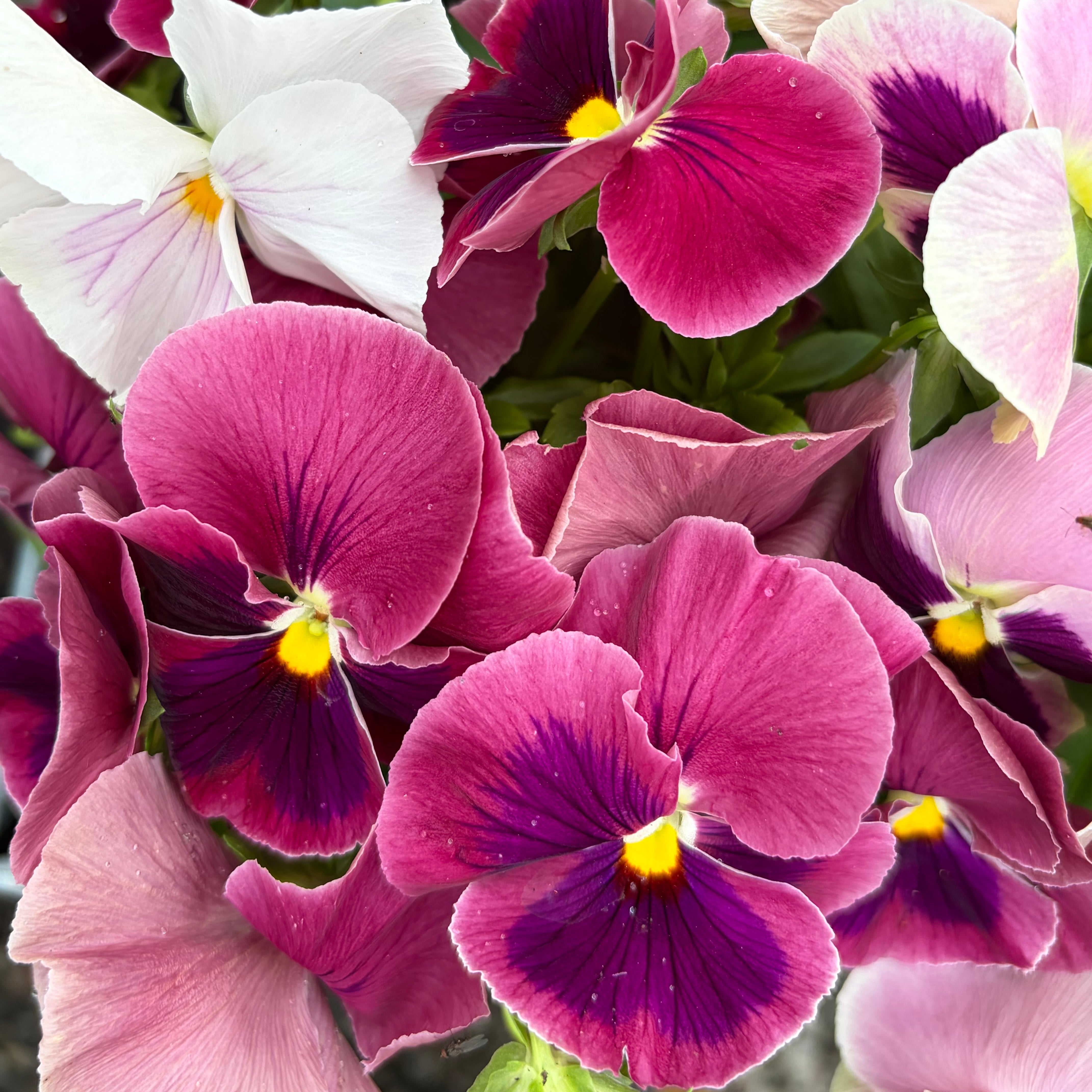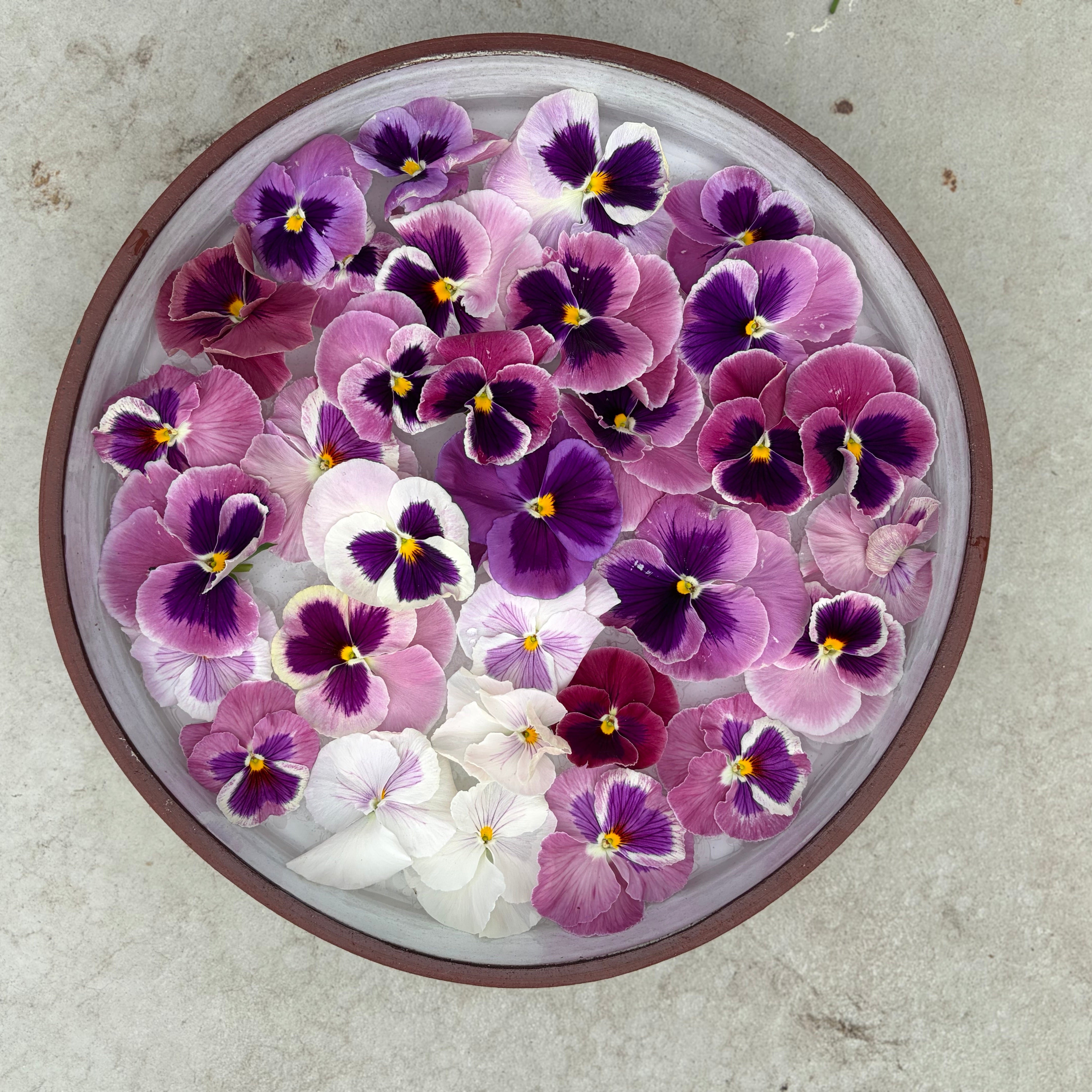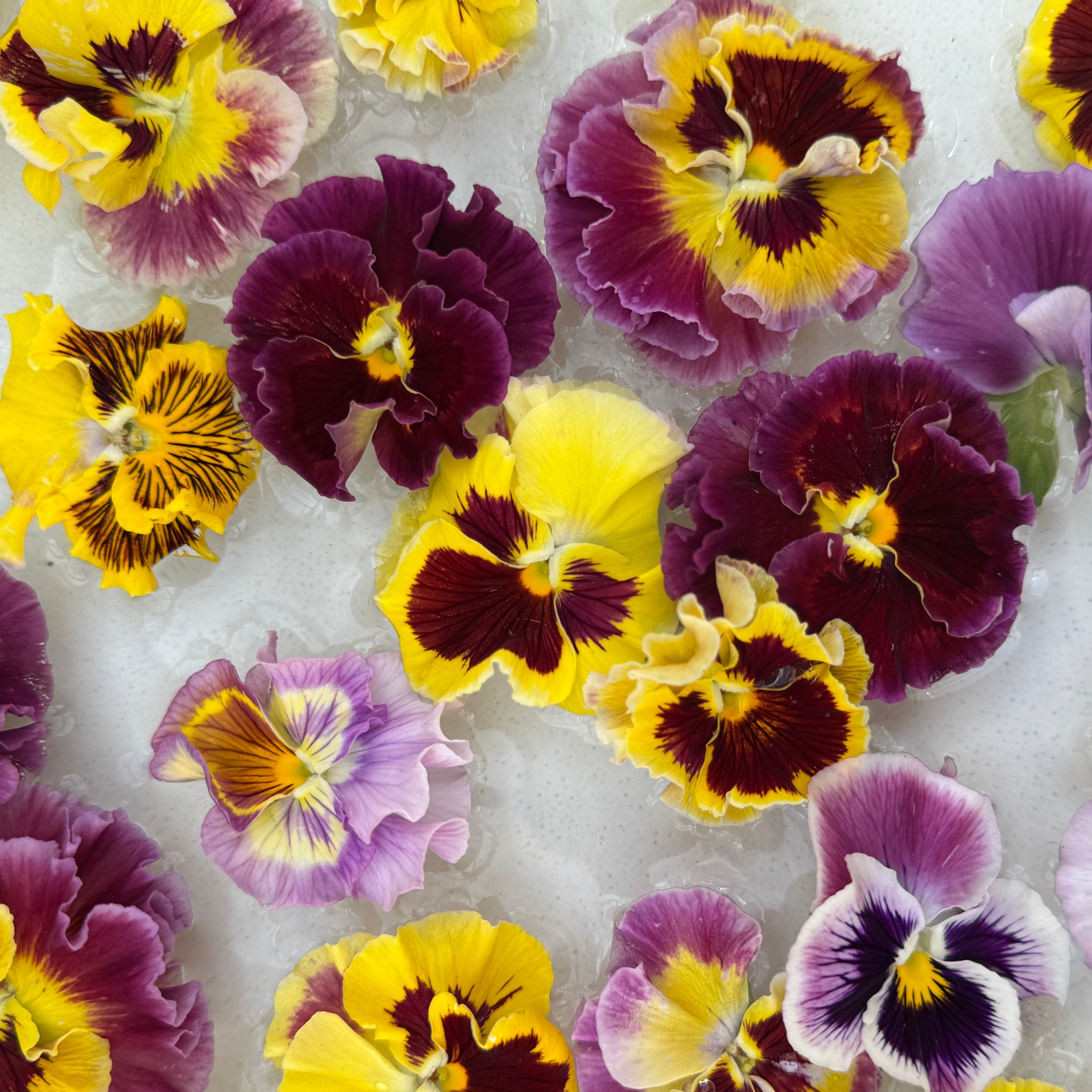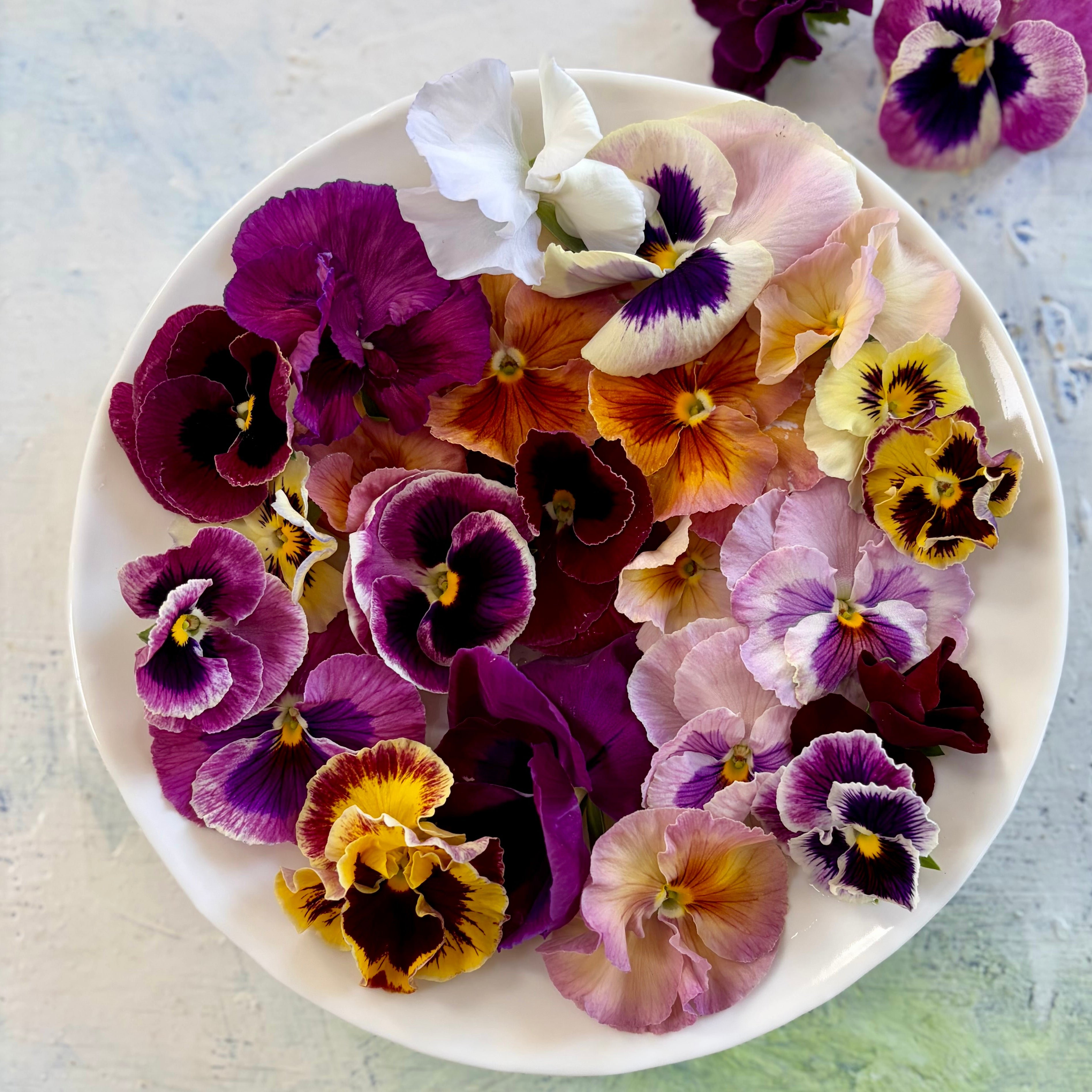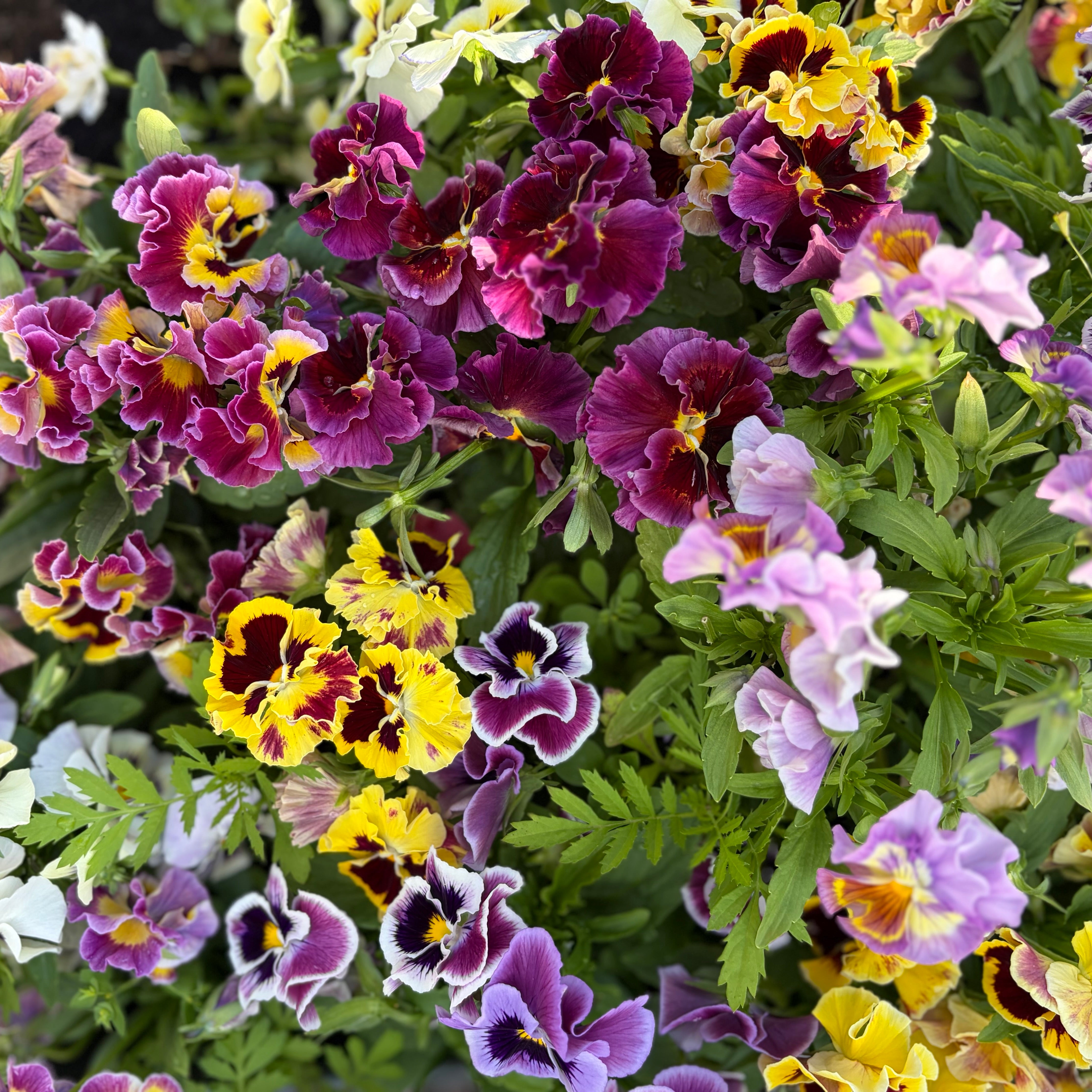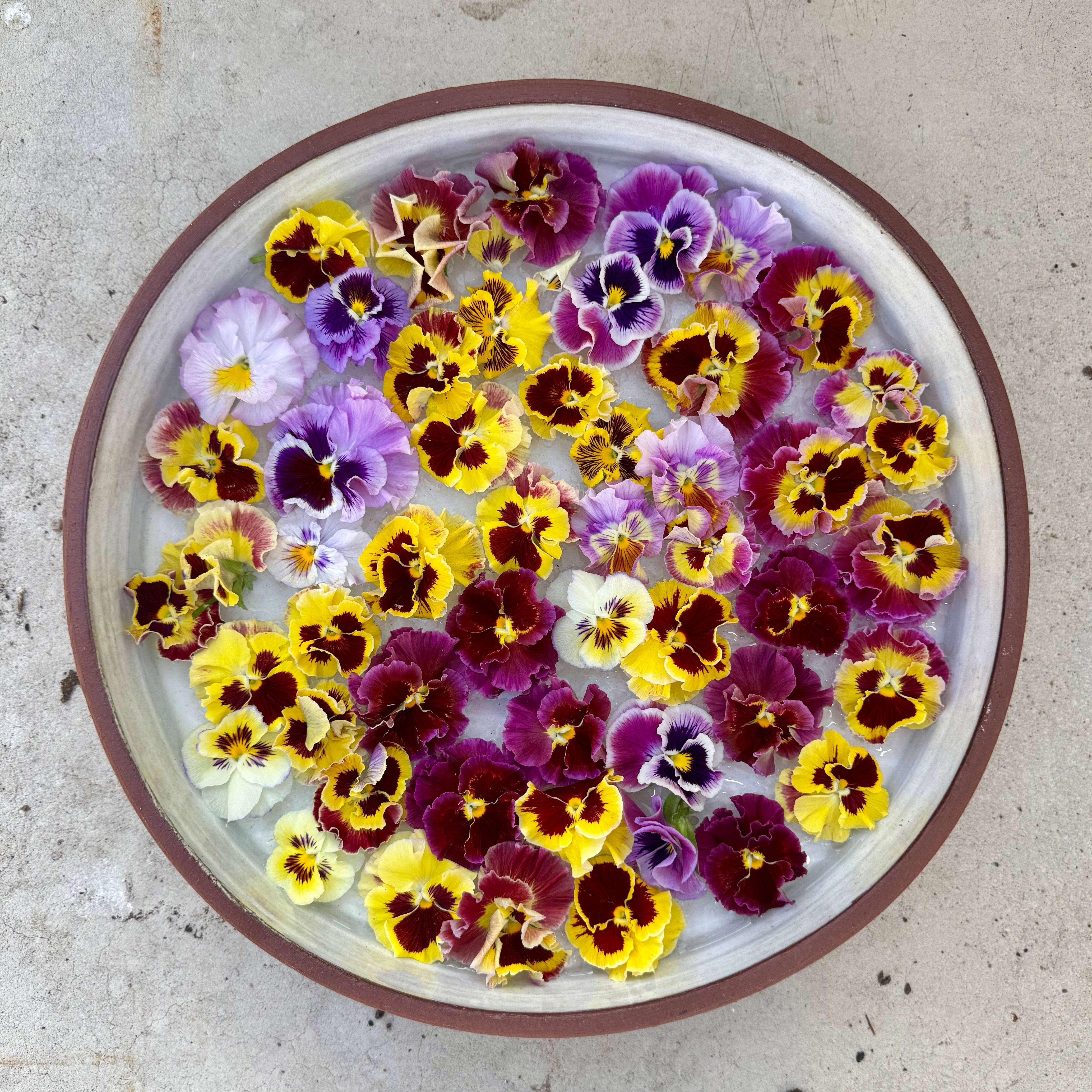



Pansies
When the sweet pea season ends, we want new projects
So, in October-November for early spring flowering or January-February for summer flowering. Pansy seeds germinate poorly if it gets too warm. Therefore, you should sow the seeds when it's cool, preferably below 15°.
My seedlings were in an unheated greenhouse from sowing until approximately March.
Fill a seed tray with potting soil. Press down the soil and water thoroughly.
Place one seed in each cell. This takes some time but gives the best results. Pansies are light-germinating so the seed should not be covered with soil. Sprinkle a thin layer of vermiculite over the entire tray.
After approximately 14-20 days, the seeds will begin to germinate. It is important that the seeds are not kept too warm.
Be careful to keep the seedlings moist at all times by misting the plants or by placing the entire seed tray in a large sowing tray that can be filled with a little water at the bottom. (Note that pansies are not aquatic plants)
When the weather feels favorable, move the seedlings outdoors. Place in a semi-shady spot and keep consistently moist. Pansies can withstand a few degrees below zero and even a little snow.
After about 6 – 8 weeks, it's time to re-pot the seedlings in fertilized potting soil. This is easily done by planting one plug in a 7 cm pot filled with nutrient-rich soil.
When the plants have grown a bit and perhaps show some flower buds, it's time to plant them in flowerbeds or pots. Plant closely for longer stems.